


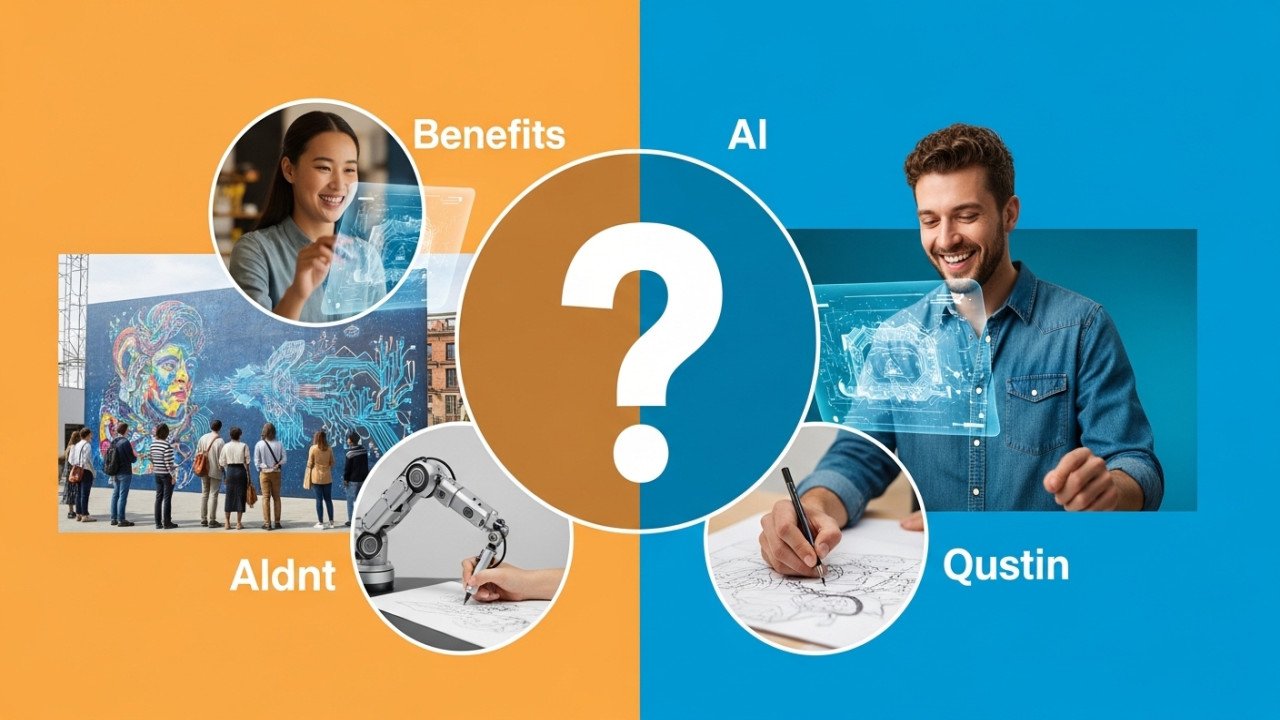
Is AI Art the Future? Benefits, Risks, and Real Use Cases
Is AI Art the Future? Benefits, Risks, and Real Use Cases
AI art is likely part of the future of visual creation, but not the entire future of creativity. The more accurate view is that AI will become a powerful creative layer inside design, marketing, entertainment, education, and e-commerce, while human taste, strategy, and originality will remain the difference between average output and meaningful work.
AI art matters because it changes the speed of creation. Ideas that once took hours to sketch, draft, or mock up can now be explored in minutes, which makes it useful for both solo creators and large teams. At the same time, speed creates new problems: oversupply, sameness, legal uncertainty, and pressure on working designers to prove deeper value than “just making visuals.”
What AI art is actually changing
AI art is already moving from novelty to a workflow tool. Instead of replacing every illustrator or designer, it is being used to brainstorm concepts, create drafts, test visual directions, generate social content, build moodboards, and speed up production for routine creative tasks.
That shift is important because most real creative work is not pure inspiration. It involves iteration, revisions, exploration, and communication. AI is especially strong in those early and middle stages, where teams need many options quickly, but still need human judgment to choose what is on-brand, emotionally right, and commercially effective.
Real-world applications
AI art is already useful in practical, repeatable ways across different industries:
Marketing teams use it for ad concepts, blog visuals, product mockups, thumbnails, and campaign ideas.
E-commerce brands use it for lifestyle product scenes, packaging concepts, seasonal creatives, and quick A/B test visuals.
Game and film teams use it for concept art, environments, character ideation, and visual world-building.
Publishers and creators use it for cover concepts, story illustrations, social graphics, and presentation visuals.
Educators use it to create explainers, visual examples, and custom teaching materials.
Interior, fashion, and branding teams use it to explore styles before moving into final production.
The biggest value appears when AI is used to reduce low-leverage creative labor. For example, a designer can test ten visual directions for a landing page hero image in one session, then refine the best option manually. That is very different from asking AI to replace the entire brand process from strategy to final files.
Benefits of AI art
The most obvious benefit is speed. AI helps creators move from idea to draft much faster, which is especially valuable when deadlines are tight or when a team needs many concepts before committing to one direction.
Another major benefit is accessibility. People who are not trained illustrators can still create useful visuals for websites, articles, social media, and product concepts. That lowers the barrier to entry for small businesses, solo founders, teachers, and content creators who previously depended on stock assets or expensive custom work.
AI art also improves experimentation. It becomes easier to test styles, moods, color systems, compositions, and storytelling angles without spending a full production budget. In practice, this means more creative exploration at the start of a project, which can lead to better final decisions.
There is also a productivity benefit for experienced professionals. A strong designer or art director can use AI as a multiplier: generating references, building moodboards, roughing out ideas, and accelerating repetitive tasks while keeping creative control. In that workflow, AI does not reduce quality; it frees time for higher-level work like concept clarity, brand alignment, and refinement.
Risks and limitations
The biggest limitation is that AI can generate impressive surfaces without true understanding. It can make an image look polished, but that does not mean the image communicates the right message, matches a brand system, or solves a business problem.
Another problem is sameness. Because many users rely on similar prompts and similar models, AI visuals can start to feel generic very quickly. The result is a flood of content that looks good at first glance but lacks a distinct point of view.
There are also technical weaknesses. AI still struggles with consistency across multiple images, precise brand control, text rendering in some cases, detailed anatomy, and complex scenes with many interacting elements. It can produce great one-off visuals, but many professional projects need a repeatable system, not just a lucky result.
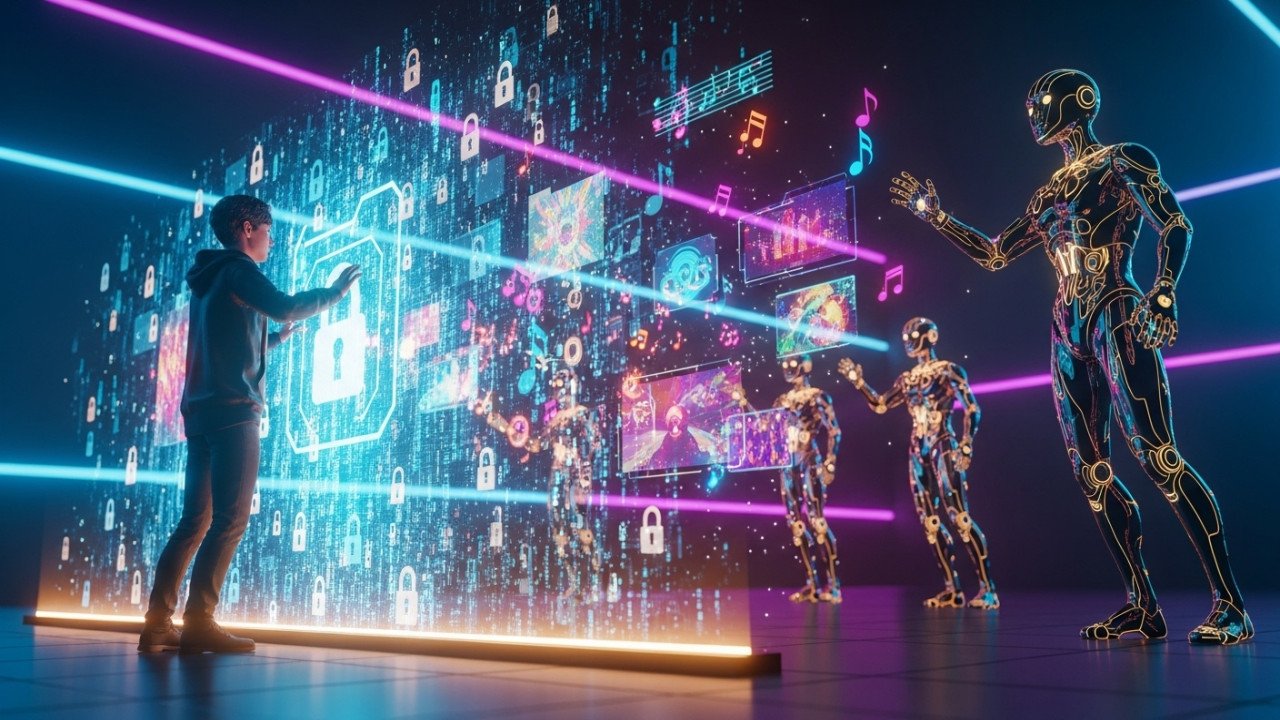
Legal and ethical uncertainty is another serious concern. Questions around training data, copyright, imitation of living artists, and commercial rights remain important. Even when a tool allows commercial use, brands still need to think carefully about originality, licensing terms, and reputational risk.
Finally, there is the human risk: overreliance. If creators stop developing core skills like composition, storytelling, typography, color judgment, and visual hierarchy, they may become dependent on tools without understanding why one image works and another does not.
Impact on designers and creators
AI art will almost certainly reshape creative jobs, but reshaping is not the same as erasing. The routine parts of creative production will become faster and cheaper, which means designers who only provide execution may feel pressure first.
At the same time, the value of higher-level creative skills is likely to increase. Clients and companies still need people who can define a concept, build a visual system, understand audience psychology, maintain brand consistency, and turn rough outputs into finished work. In other words, taste, direction, editing, and strategy become more valuable when raw generation becomes easy.
For freelancers and agencies, this creates both risk and opportunity. The risk is price compression for simple visual tasks. The opportunity is offering a smarter service: faster ideation, more creative options, stronger art direction, and better final polish than clients can get by typing a basic prompt themselves.
For artists, the future may become more polarized. Some will reject AI entirely, some will use it privately for exploration, and others will build hybrid workflows where drawing, photography, 3D, and AI generation all work together. The strongest position is usually not blind acceptance or total denial, but deliberate use with clear creative boundaries.
Ethics and the future
A trustworthy view of AI art has to include ethics, not just excitement. The most important questions are not only “Can AI make this?” but also “Was it trained fairly?”, “Does it imitate too closely?”, “Was the audience told how it was made?”, and “Who benefits economically from this workflow?”
Responsible use should include a few practical principles:
Avoid prompting for the exact style of living artists.
Review platform terms before commercial use.
Disclose AI involvement when transparency matters.
Use human review for branded, editorial, or sensitive content.
Treat AI output as draft material when originality is critical.
So, is AI art the future? Yes, in the sense that it will become a normal part of creative production. No, in the sense that it will not make human creativity irrelevant. The future is more likely to belong to creators who know how to combine AI speed with human judgment, ethics, and taste.
A simple way to frame it is this: AI can generate images, but people still create meaning. That is why the long-term winners will not be the people who use AI the most, but the people who use it best.
Comments (0)
No comments found