


Top AI Art Styles You Can Generate (With Examples)
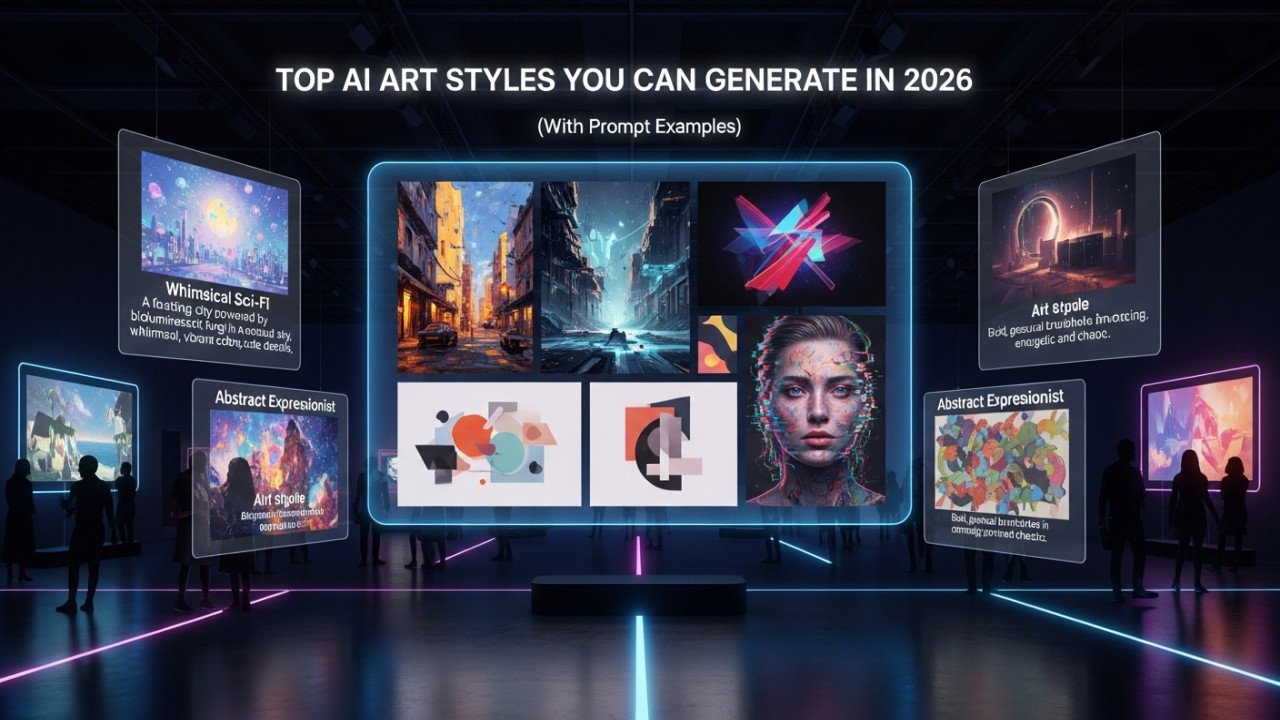
Top AI Art Styles You Can Generate in 2026 (With Prompt Examples)
AI image tools are now good enough to produce very different visual looks from the same idea, which is why choosing the right art style matters almost as much as writing the prompt itself. Popular styles users keep returning to include photorealism, anime and manga, fantasy and sci-fi, digital painting, and clean 3D renders, while cyberpunk, surreal, and watercolor-inspired looks also perform well because they are visually distinctive and easy to guide with prompts.
This guide explains the top AI art styles in simple terms, shows when to use each one, gives you ready-to-try prompts, and helps you decide which style fits your project best. It is written so beginners can copy a prompt and start fast, while more advanced users can customize each style for better results.
Why style matters
Some art styles are easier for AI to reproduce consistently because they have strong visual patterns, clear structure, and lots of examples in training data. Anime and manga are a strong example: clean linework, cel shading, and recognizable proportions give AI models a stable visual template, while realism works well when trust and polish matter most.
Style choice also affects who the image appeals to. Anime and manga often work well for younger audiences and gaming content, realism fits brands and product visuals, and surreal or fantasy styles are better when you want imagination, emotion, or a world that feels impossible in real life.
Style overview
| Style | What it looks like | Best for | Expected result |
|---|---|---|---|
| Anime / Manga | Clean lines, cel shading, expressive eyes, readable character shapes. | Character art, thumbnails, gaming content, avatars. | Bold, colorful images with strong character appeal. |
| Cyberpunk | Futuristic cities, neon lighting, tech-heavy details, sci-fi mood. | Posters, concept art, edgy social visuals, futuristic branding. | High-contrast scenes with neon glow, rain, reflections, and urban energy. |
| Photorealistic | Camera-like detail, believable lighting, realistic textures. | Product shots, portraits, blog headers, ads, brand visuals. | Images that look close to real photography when prompted well. |
| Fantasy / Sci-Fi | Imagined worlds, creatures, magical effects, epic environments. | Book covers, concept art, storytelling, wallpapers. | Cinematic scenes with scale, mood, and dramatic atmosphere. |
| 3D Render | Smooth surfaces, clean shapes, modern lighting, polished depth. | Product concepts, mascots, UI visuals, modern marketing graphics. | Crisp images with a sleek, digital, studio-made look. |
| Digital Painting | Painterly brushwork, soft blending, artistic texture. | Editorial art, posters, fantasy scenes, cover art. | Rich illustrative results that feel designed rather than photographed. |
| Surreal Art | Dreamlike combinations, strange objects, unexpected compositions. | Creative campaigns, album art, experimental visuals. | Unusual images that feel imaginative, symbolic, or emotionally charged. |
| Watercolor / Storybook | Soft washes, gentle edges, handmade illustration feel. | Children’s content, gentle branding, whimsical scenes. | Soft, warm, friendly images with a light artistic feel. |
| Oil Painting | Thick brush texture, dramatic lighting, classic fine-art mood. | Portraits, historical scenes, elegant wall art, premium visuals. | Images that feel timeless, textured, and gallery-inspired. |
Prompt examples
1. Anime / Manga
Prompt:
Anime-style girl standing on a school rooftop at sunset, wind in her hair, clean line art, cel shading, expressive eyes, pastel sky, cinematic framing
Why it works:
Anime prompts usually perform best when you clearly ask for clean line art, cel shading, and expressive facial features, because those are core cues of the style.
Expected result:
A bright, polished character scene with strong outlines, readable emotions, and a dramatic but clean composition.
2. Cyberpunk
Prompt:
Cyberpunk street market at night, neon pink and blue lighting, wet pavement reflections, holographic signs, futuristic clothing, cinematic atmosphere, highly detailed
Why it works:
Cyberpunk prompts improve when you describe both the technology and the mood, not just the word “cyberpunk” by itself. The strongest results usually include neon, rain, reflections, signage, and a dense futuristic city feel.
Expected result:
A dramatic sci-fi image with glowing colors, urban depth, and a moody future-city vibe.
3. Photorealistic
Prompt:
Photorealistic portrait of a young man in a modern café, soft window light, 50mm lens, natural skin texture, shallow depth of field, realistic shadows, documentary-style photography
Why it works:
Realism usually looks better when the prompt describes the scene like a photo shoot, with lighting, lens choice, and texture details instead of just saying “ultra realistic.”
Expected result:
A believable portrait with natural skin, soft blur in the background, and lighting that feels camera-based rather than artificial.
4. Fantasy / Sci-Fi
Prompt:
Ancient floating castle above the clouds, glowing waterfalls, giant moon, epic fantasy concept art, dramatic lighting, highly detailed environment
Why it works:
Fantasy and sci-fi styles are strong when you combine a clear world concept with scale, lighting, and atmosphere. AI tends to shine when it can build a scene that feels larger than life.
Expected result:
A cinematic fantasy image with world-building details and strong visual drama.
5. 3D Render
Prompt:
Cute 3D robot mascot standing on a glossy platform, soft studio lighting, rounded shapes, premium 3D render, clean reflections, white background
Why it works:
3D-style prompts work best when you ask for shape clarity, clean studio lighting, and polished materials. This style is especially useful when you want a modern, product-like finish.
Expected result:
A smooth, polished image that feels like a rendered product shot or brand mascot.
6. Digital Painting
Prompt:
Digital painting of a warrior queen in a red cloak, stormy sky behind her, textured brushwork, dramatic side lighting, cinematic composition
Why it works:
Digital painting sits between illustration and concept art, so it works well when you want emotion, texture, and artistic control without aiming for realism.
Expected result:
A bold, painterly image with stylized lighting and visible artistic depth.
7. Surreal Art
Prompt:
Surreal artwork of a giant floating eye above a desert, melting clocks, long shadows, dreamlike atmosphere, symbolic composition, muted gold and blue palette
Why it works:
Surreal prompts are strongest when they intentionally combine objects that do not belong together in real life. That “impossible but coherent” feeling is exactly what makes this style visually memorable.
Expected result:
A strange, symbolic image that feels more like a dream or an art exhibition piece than a normal illustration.
8. Watercolor / Storybook
Prompt:
Watercolor storybook illustration of a small fox walking through a glowing forest, soft pastel colors, gentle brush texture, warm light, whimsical atmosphere
Why it works:
Watercolor-style prompts benefit from soft color language and gentle mood cues rather than sharp, hyper-detailed instructions. This makes them a good fit for children’s visuals and calm, friendly designs.
Expected result:
A soft, charming illustration with hand-painted warmth and a light emotional tone.
9. Oil Painting
Prompt:
Oil painting portrait of a noblewoman in candlelight, rich red velvet dress, dramatic shadows, textured brush strokes, classical composition, museum-quality detail
Why it works:
Oil painting prompts improve when you emphasize classic materials, dramatic light, and visible texture instead of modern photographic language.
Expected result:
A timeless portrait with depth, brush texture, and a fine-art look.
How to choose the right style
Choose anime or manga when you want strong characters, fast readability, and visuals that feel energetic or youth-focused. Choose photorealistic when the goal is trust, product quality, business use, or portraits that should feel believable.
Choose cyberpunk when you want futuristic energy, fantasy or sci-fi when you want world-building, 3D render when you want clean modern polish, and watercolor or storybook when you want softness and warmth. If you want something artistic but flexible, digital painting is often the safest middle ground because it can look dramatic without needing full realism.
A simple rule helps:
Use realism for brands, products, and believable photos.
Use anime for characters, avatars, and gaming visuals.
Use cyberpunk for futuristic drama.
Use fantasy for epic storytelling.
Use 3D for polished commercial visuals.
Use oil painting or digital painting for elegant artistic scenes.
Use watercolor for soft, friendly, or children-focused images.
Experiment on imagartai
The fastest way to learn style prompting is to test the same subject in several styles and compare the results. For example, take one idea like “a girl in a city” and generate it as anime, cyberpunk, photorealistic, oil painting, and 3D render; that single exercise will teach you more about style direction than reading ten generic prompt tips.
A strong workflow is simple:
Start with one subject.
Change only the style.
Compare lighting, color, detail, and mood.
Save the versions that match your goal.
Refine the best one with extra details.
Try these styles on Imagartai and build your own prompt library. Once you see how the same concept changes across anime, cyberpunk, oil painting, realism, and 3D, choosing the right style becomes much easier.


Comments (0)
No comments found